
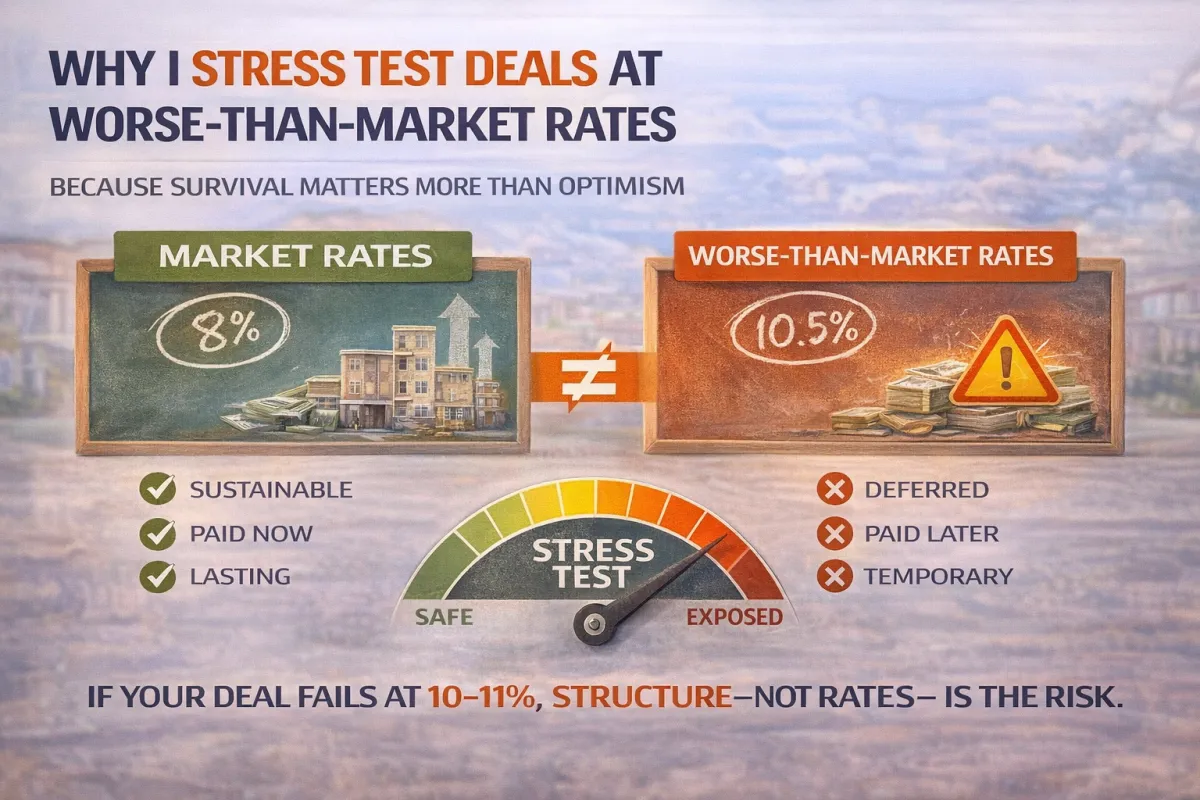
Why I Stress Test Deals at Worse-Than-Market Rates
Why I Stress Test Deals at Worse-Than-Market Rates
Because survival matters more than optimism
Most investors underwrite deals to today’s rate environment.
I don’t.
If a deal only works at current rates, it’s not resilient—it’s fragile.
And fragile deals don’t fail immediately. They fail later, when there’s no flexibility left.
Stress testing is not pessimism.
It’s responsibility.
Let me show you why—using a real deal I reviewed that looked solid on the surface.
The Comfort Trap: “It Works at Today’s Rate”
Here’s the pattern I see constantly:
Deal pencils at current DSCR rates
Cash flow is thin but positive
Lender says yes
Buyer feels “safe”
But underwriting to today assumes:
Rates won’t move
Insurance won’t spike
Taxes won’t reset
Refinancing will be easy
That’s not underwriting.
That’s anchoring.
Markets don’t care what your spreadsheet assumed.
Case Study: 108 Piney Mountain Rd – Greenville, SC (18-Lot MHP)
This deal is a perfect example of why stress testing matters.
The Snapshot (At Market Rates)
Asset: 18-lot mobile home park (100% tenant-owned homes)
Purchase Price: $1,080,000
Gross Rent: ~$101,600/year
NOI: ~$71,600/year
At moderate interest rates (7–8%), this deal looks fine.
But that’s not the environment we were actually in.
Stress Test Reality: 10.75% Rates
When we ran lender-quoted terms:
Senior Loan: $756,000 (70% LTV)
Interest Rate: 10.75%
Annual Debt Service: ~$63,400
DSCR: ~1.13×
On paper, it almost works.
In reality?
It fails most lender minimums
Leaves no margin for error
Breaks the moment expenses move or vacancy appears
The deal didn’t become “bad.”
The assumptions were exposed.
Why I Always Underwrite Worse-Than-Market
I don’t ask:
“Does this work today?”
I ask:
Does this work 200 bps higher?
Does it survive insurance resets?
Can it absorb vacancy without deferrals?
Will a future lender still like it?
If the answer is no, the deal isn’t broken—
the structure is.
Stress Testing Reveals the Truth About Risk
Stress testing does three critical things:
1. It Exposes False Margin
Thin cash flow isn’t discipline—it’s exposure.
2. It Forces Structure Conversations Early
Price, seller carry, IO periods, and leverage all get clearer when the deal is stressed.
3. It Protects You From Refi Fantasy
If the deal only survives after “perfect execution,” you’re underwriting hope.
Hope doesn’t refinance.
The Key Lesson From Piney Mountain
At lower leverage, better terms, or a price reset, Piney Mountain could work.
At stretched leverage and real rates?
It doesn’t.
That’s not pessimism.
That’s honest math.
And honest math is what keeps investors alive long enough to compound.
This Is Exactly How I Review Deals
When I structure or review deals for clients, I don’t optimize for:
Best-case IRR
Pretty pro formas
Lender approval alone
I optimize for:
Survival
Flexibility
Exit optionality
Refinance realism
If you want your deals stress-tested the same way—before you commit capital—you can see how I work here:
👉 https://chadchoquette.com/how-i-work
And if you want hands-on help structuring or reviewing a deal:
👉 https://chadchoquette.com/deal-structure-services
Because deals don’t fail when times are easy.
They fail when assumptions get tested.
Stress test first.
Sleep better later.
